


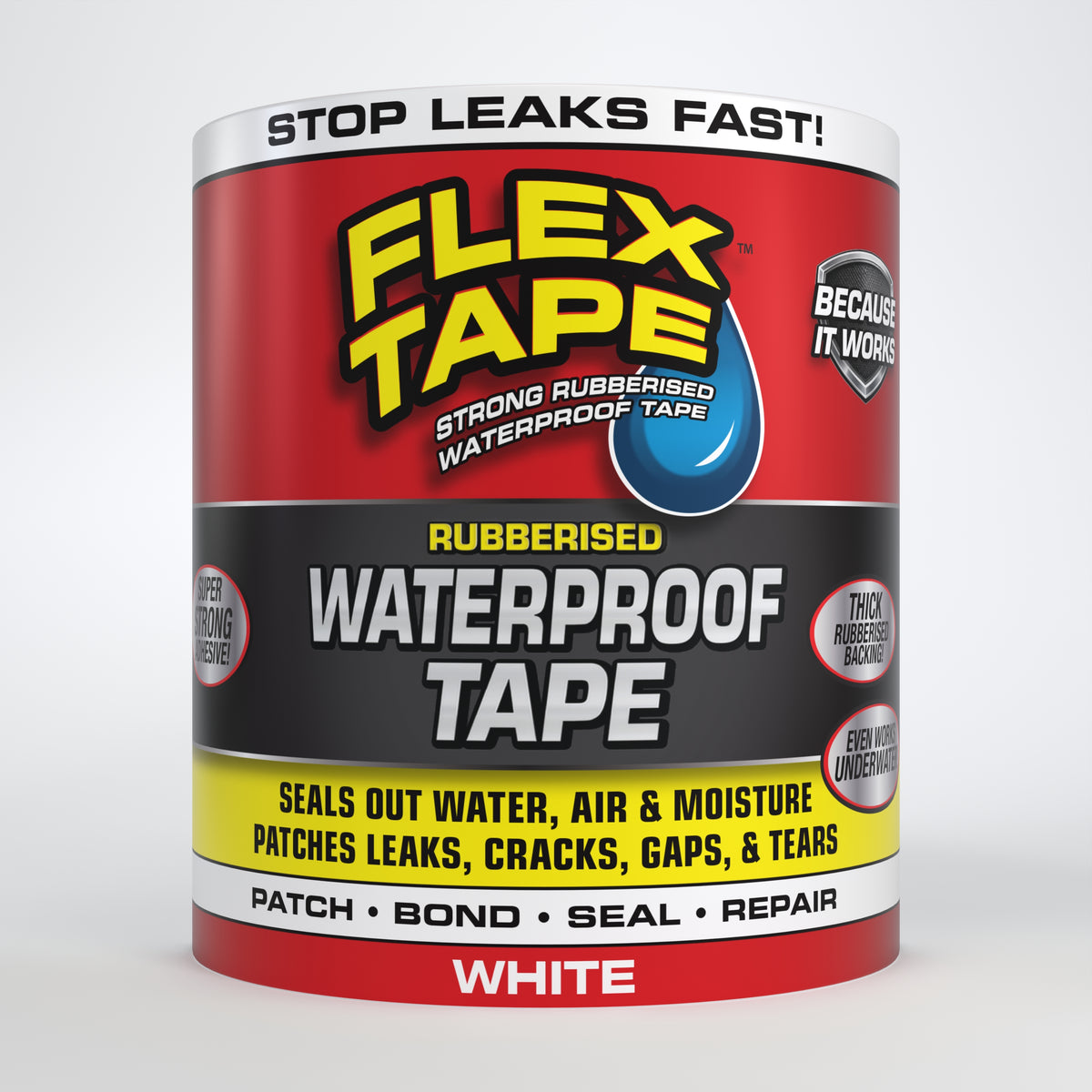
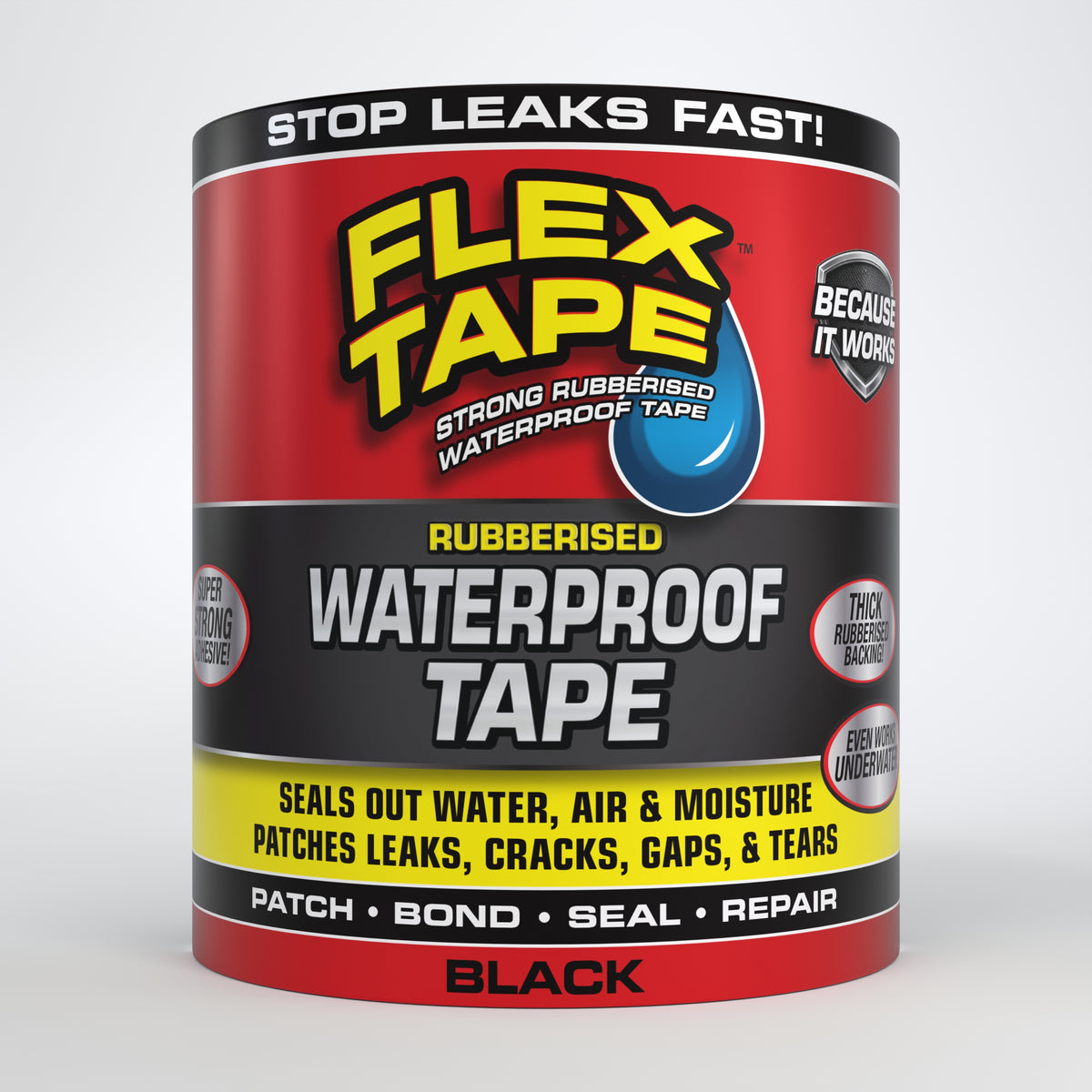
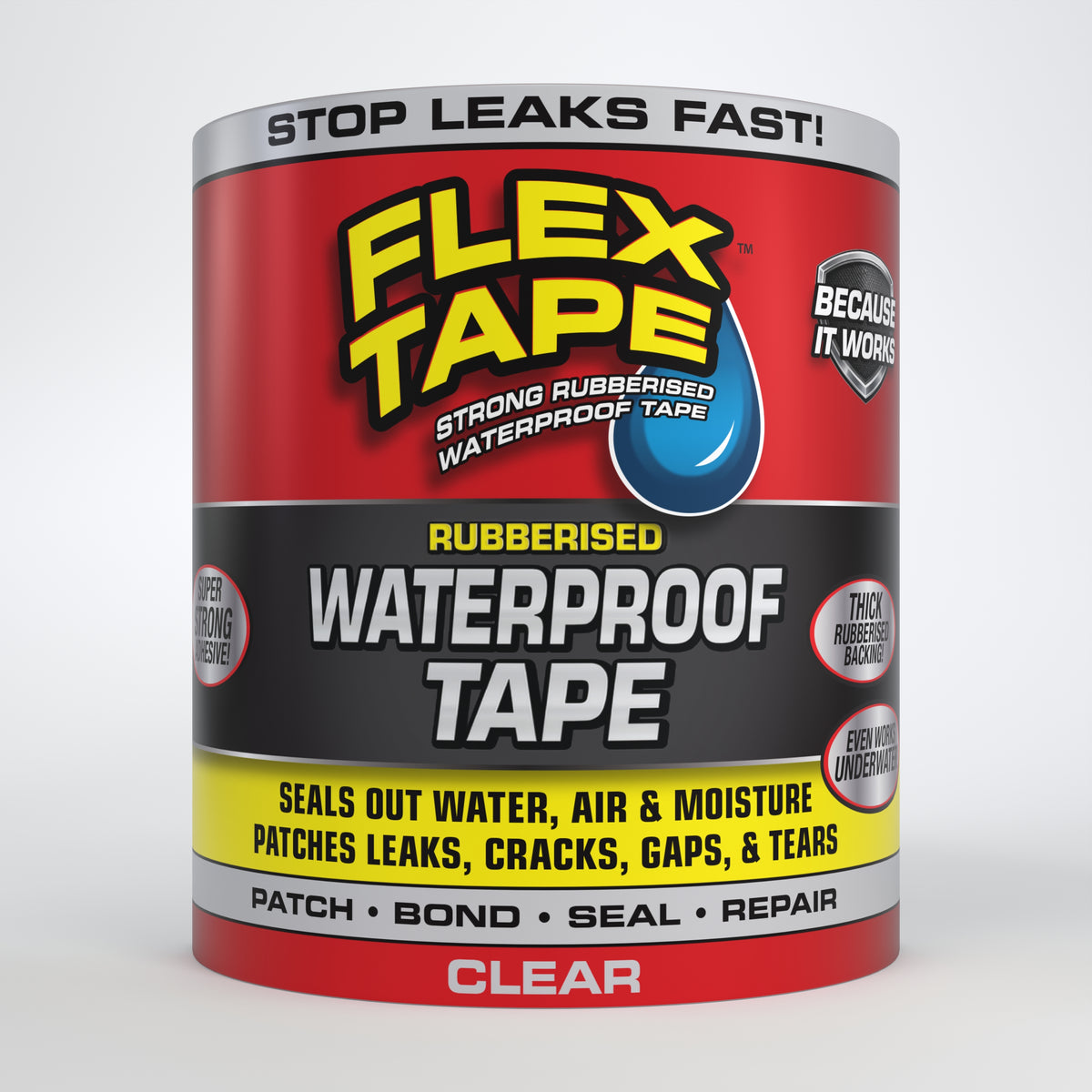
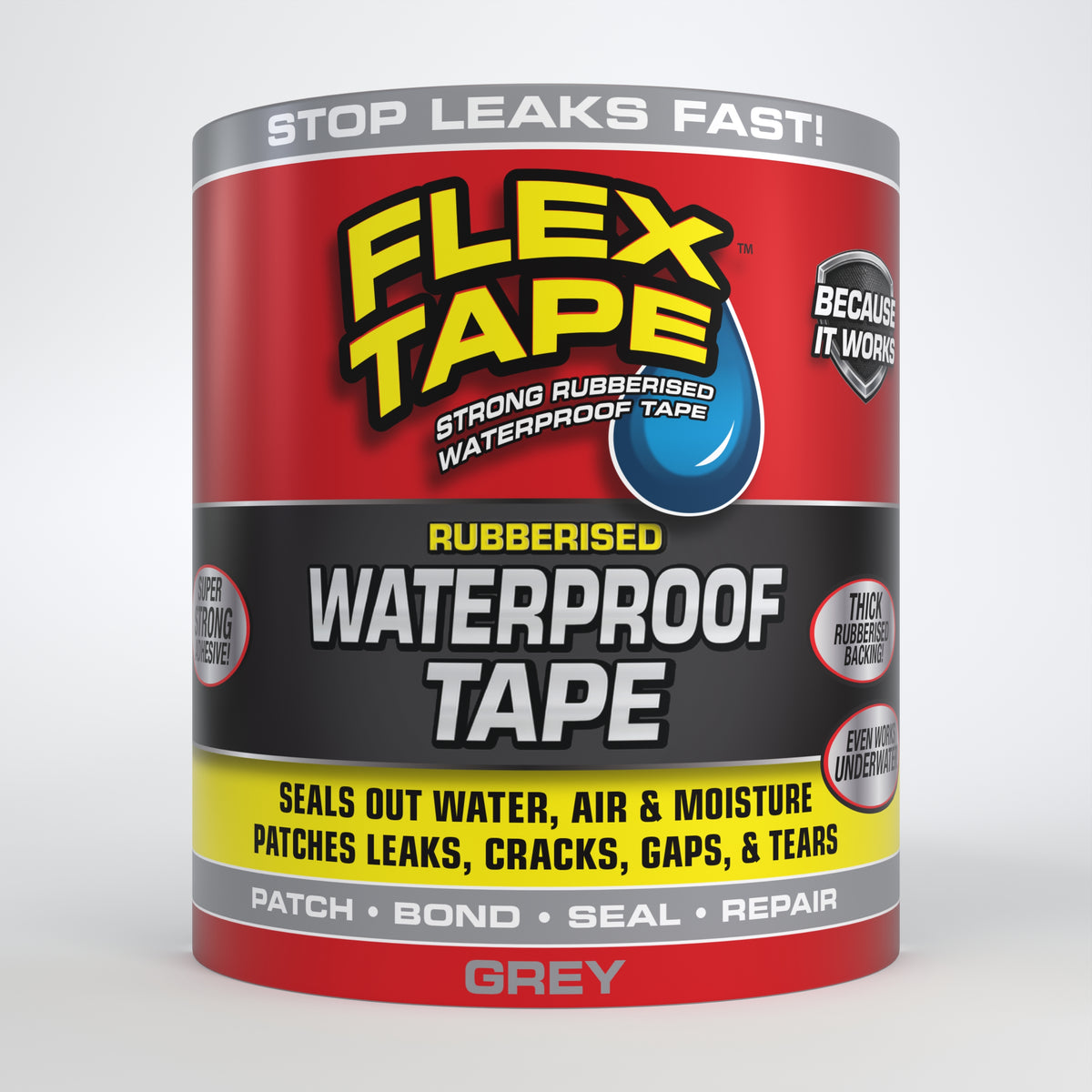
Flex Tape
SUPER STRONG WATERPROOF TAPE
SUPER STRONG WATERPROOF TAPE
Powerful adhesive with a thick, flexible rubberised backing that conforms to virtually any shape and surface, even underwater. Gets stronger with time and pressure. UV resistant, VOC-free, withstands extreme temperature and weather conditions.
• Plumbing repairs
• Seal out air and water
• General home repairs
• Fast fixes on boats, cars and motorhomes
• Roof repairs
• Pool repairs
• Bath and shower repairs
• DIY projects and more
Works on: PVC, acrylic, metal, steel, copper, aluminium, wood, ceramic, porcelain, tile, glass, rubber, fibreglass, stucco, plaster, stone, cement, concrete, plasterboard, EPDM roofs, some plastics, fabrics, vinyl and more.
How To Use Flex Tape
1. CUT. Leave backing on tape and cut to desired dimension. Make sure to use a high quality Stanley knife with disposable blades or a razor blade when cutting.
2. PEEL. Remove the backing from the tape.
3. STICK. Apply tape to a clean surface and press down firmly.
4. SEAL. Using your fingers, plastic squeegee or roller, press down firmly and remove any air pockets.
Flex Tape is a temporary, emergency repair and is not meant to be a permanent fix.
Flex Tape may not bond to all hoses.
How To Use Flex Tape on Wet Surfaces or Underwater
For best results, when applying on wet surfaces or underwater, make sure the area being sealed is clean and free of any grease, oil, dirt, debris or algae. Only use on smooth, clean non-porous surfaces and applied at room temperature.
1. Keep the liner on and cut Flex Tape to create a patch larger than the area being repaired. You can also round the corners of the patch to help prevent the corners from lifting.
2. Remove the liner and apply the Flex Tape firmly over the area being sealed. Once applied Flex Tape cannot be repositioned. For best results, apply Flex Tape to both sides of the repair.
3. Press firmly using your fingers, squeegee, credit card, roller and continue pressing firmly starting at the centre and working towards edges.
4. Make sure all water, air pockets, creases and folds have been completely removed. These areas are where water could seep through and create a leak.
5. Continue pressing firmly for 1 minute or longer to allow Flex Tape's adhesive to completely bond to the surface being sealed.
May not adhere to certain surfaces such as siliconised or water-repellent materials. May cause damage to the surface if removed. Not intended for high pressure applications, such as garden hoses or engine repairs.
FLEX TIPS
For maximum adhesion on porous surfaces, using a standard hairdryer will help the adhesives bond with the surface.
Flex Tape's bond will increase with time and pressure. Continued firm pressure will help increase adhesion.
Once fully bonded, Flex Tape cannot be repositioned.
Flex Tape adhesives may resist bonding to some plasticised or waterproof materials, siliconised, greasy, oily, dirty, or porous surfaces.
Certain fabrics such as canvas, nylon, polyester, synthetics, cotton and some other materials may need up to 24 hours to reach maximum hold.
Q: What is Flex Tape?
A: Flex Tape is a super strong waterproof tape. It has a powerful adhesive with a thick flexible rubberised backing that conforms to virtually any shape and surface, even underwater.
Q: In what temperatures can I apply Flex Tape?
A: Flex Tape is best applied to surface temperatures from -6°C to 49°C. Flex Tape can withstand temperatures from -57°C to 93°C.
Q: What is the maximum pressure it can withstand?
A: The maximum pressure Flex Tape can withstand will vary based on the substrate and the conditions under which it is applied. It's always best to test a small area first.
Q: If I'm using it to patch an above ground pool, is it best to apply it to the inside or the outside of the pool?
A: Both! Flex Tape forms a super strong bond with itself, so if you're patching a pool, it's best to first apply Flex Tape to the interior side of the pool wall and then place a second piece of Flex Tape to the exterior. Remember to cut your Flex Tape larger than the area of the leak. You do not need to drain the pool prior to applying it. Flex Tape is a temporary, emergency repair and is not meant to be a permanent fix.
Q: I'm trying to adhere it to fabric, but it's not sticking. Is there anything I can do to prep the surface?
A: Flex Tape can be heated with a standard hairdryer to help the adhesive bond with the fabric. Also, continued firm pressure and time will help increase adhesion. Some customers have found it helpful to first prep a fabric surface with Flex Seal aerosol, let it dry, and then apply Flex Tape.
Q: Can I use it on a container that holds water for drinking?
A: It has not been tested on potable drinking water.
Q: Can I use it to repair an air mattress or inflatable?
A: Flex Tape can be used as a temporary, emergency repair to an air mattress or inflatable. However, it may not bond


